
As part of our commitment to free expression, we recognize the importance of sharing your opinions and seeking to shape public policies by influencing others, including policymakers at the local, state and federal levels. To that end, we offer this guide on how you, the student, might engage with policymakers on the policy issues you care most about. You can and should feel empowered to advocate for your interests.
Before You Engage
Students, faculty and staff should be mindful of the following limitations to advocating on behalf of the university which are related to state and federal compliance requirements.
Unless specifically asked to do so by Vanderbilt鈥檚 Government Relations team, you must never position yourself as speaking on behalf of the university. If you are interested in聽specifically engaging on the university鈥檚 policy priorities聽at any level, our team can help assist you with logistics, compliance and messaging.
Note: Contacting the Government Relations team is unnecessary if you are advocating on personal time and on behalf of yourself or a group not officially affiliated with the university.
Step One: Vote
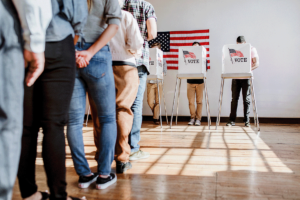 The first level of being an engaged citizen is to vote. Vanderbilt, Let鈥檚 Vote, powered by , was created to encourage every member of the university community鈥攕tudents, staff and faculty鈥攖o participate in the democratic process and exercise their right to register and vote in federal, state and local elections held in their districts of residence.
TurboVote is a digital tool that powers greater voter access and expands participation in our elections. TurboVote helps America vote in all 50 states and D.C. by providing lifelong voter support across elections鈥攍ocal through national. Every student can , which helps with:
Step Two: Contact Your Elected Officials
 After you have exercised your right to vote, you may be interested in leveling up your engagement. One way to do that is by contacting your elected official about an issue to voice your opinion. Below are some general best practices when engaging elected officials and further down you will find more detailed information on engaging at each of the three levels of government.
As a general note, the Government Relations team is available to consult and advise students interested in advocating鈥攚hether you are engaging independently or on behalf of the university. If you are scheduled to address a legislative body or meet directly with elected or appointed officials, please contact Vanderbilt鈥檚 Government Relations team so that we may assist you with logistics and answer any questions.
Top 10 Best Practices for Engaging Elected Officials
Advocating at the Federal Level
How do I find out who represents me at the federal level? Who represents Vanderbilt?
- Tennessee鈥檚 two U.S. senators are (R-TN) and (R-TN).
- (R-TN07) currently represents the majority of Vanderbilt 溏心vlog免费B站鈥檚 campus.
- See who represents the rest of Tennessee in Washington, D.C.
- Not sure if you鈥檙e in Rep. Green鈥檚 district or not a resident of Tennessee?
How can I contact my federal elected officials?
Once you identify your representative, visit their website to find their contact information. Some representatives may also have a form where you can request a meeting with their office.
- Their website may also include information about policy positions and priority areas.
- Most Members of Congress have a newsletter that you can read and/or subscribe to on their website.
Whether you are contacting them via phone, email or in person, here are some things to keep in mind:
- Know your 鈥渨hy鈥� for contacting them. Are you advocating for/against a particular issue or bill?
- Keep the communication clear, precise and respectful.
- Get your identified goal and 鈥渨hy鈥� across at the beginning.
- Ask for what you want. Make sure you get across:
- 鈥淚 want you to co-sponsor bill 123鈥ecause xyz...鈥�
- 鈥淚 want you to know your constituent is concerned about xyz鈥︹��
- 鈥淚 want you to vote against bill 123鈥� because xyz鈥︹��
You can also refer back to the beginning of this guide for best practices for engaging elected officials.
If I am able to connect with my U.S. Senator, U.S. Representative or someone from their staff, what happens next?
Actions you might take:
- Follow up with a thank you email after your conversation (for in-person meetings or phone calls). For email exchanges, make sure to thank them for responding.
- Continue to engage. Most issues will benefit from the following sustained engagement:
- Call or email periodically, but don鈥檛 overstay your welcome.
- Consider other communication tools like social media or opinion articles.
- Search online to find and join a coalition of other people who care about the issue or build one yourself.
Actions you should expect behind the scenes:
- The elected official or their staff will include a record of your conversation in their files. This information will be included in their consideration of how to approach the topic.
What if I am curious about tracking particular legislation at the federal level?
Research in the United States Congress, use the Library of Congress website.
- You can search for pending legislation, current public law or other options listed at this site. This database includes information on the status of legislation, including committee hearings and related votes.
Federal agencies make policy to implement the laws that Congress has passed.
- This rulemaking or regulatory process often includes an opportunity for public comment.
- You can find information about current regulatory proposals on the .
Who are the university鈥檚 lobbyists at the federal level?
Christina West
Associate Vice Chancellor for Federal Relations
(202) 216-4370
christina.west@vanderbilt.edu
Heather Bloemhard
Associate Director of Federal Relations
(202) 216-4368
heather.bloemhard@vanderbilt.edu
Remember many congressional staffers are young professionals themselves, often eager to engage with peers. Approach them as equals in age and enthusiasm, using this common ground to foster open, relatable dialogue about issues that matter to both of you. Make your connection to them personal and tell a story!
Advocating at the State Level
How do I find out who represents me at the state level? Who represents Vanderbilt?
- in the Tennessee State House of Representatives and the Tennessee State Senate.
- The following legislators represent Vanderbilt 溏心vlog免费B站鈥檚 campus:
- (D-Nashville)
- (D-Nashville)
- See the full list of Tennessee鈥檚 .
- See the full list of Tennessee鈥檚 .
- Each state has a similar .
How can I contact my State Senator or State Representative?
Once you identify your representative, visit their individual page from the full list of representatives above and locate their contact information.
Whether you are contacting them via phone, email or in person, here are some things to keep in mind:
- Know your 鈥渨hy鈥� for contacting them. Are you advocating for/against a particular issue or bill?
- Keep the communication clear, precise and respectful.
- Get your identified goal and 鈥渨hy鈥� across at the beginning.
- Ask for what you want. Make sure you get across:
- 鈥淚 want you to co-sponsor bill 123鈥ecause xyz...鈥�
- 鈥淚 want you to know your constituent is concerned about xyz鈥︹��
- 鈥淚 want you to vote against bill 123鈥� because xyz鈥︹��
You can also refer back to the beginning of this guide for best practices for engaging elected officials.
If I am able to connect with my State Senator, State Representative or someone from their staff, what happens next?
Actions you might take:
- Follow up with a thank you note after your conversation (for in-person meetings or phone calls). For email exchanges, make sure to thank them for responding.
- Continue to engage. Most issues will benefit from the following sustained engagement:
- Continue contacting your legislator periodically through calls, emails or letters.
- Use social media to promote the issue.
- Search online to find and join a coalition of other people who care about the issue or build one yourself.
- The legislator and staff will keep track of constituent input when considering how to vote on an issue.
What if I am curious about tracking a particular piece of legislation at the state level?
- Research before the Tennessee General Assembly:
- There you can search by 鈥淜eyword鈥� or 鈥淏ill Number鈥� or by 鈥淪ubject.鈥�
- online.
- Research how a bill would affect .
- Enter the number of the section of code, which is referenced within the bill, e.g., 71-5-1401.
- Click 鈥淪earch.鈥�
Learn more about in Tennessee.
Who is the university鈥檚 lobbyist at the state level?
Daniel Culbreath
Assistant Vice Chancellor for State Government Relations
(615) 343-6749
daniel.culbreath@vanderbilt.edu
Remember to always be respectful when interacting with elected officials and members of their staff, especially if you happen to disagree on policy items. The legislative process can take time鈥攂e patient and remember that your voice matters!
Advocating at the Local Level
How do I find out who represents me at the local level? Who represents Vanderbilt?
- in Nashville's Metro Council.
- The following Council Members represent Vanderbilt 溏心vlog免费B站鈥檚 campus:
- , District 18
- , District 17
- , District 19
How can I contact my local Council Member?
Once you , visit their individual web page and locate their contact information.
Whether you are contacting them via phone, email or in person, here are some things to keep in mind:
- Know your 鈥渨hy鈥� for contacting them. Are you advocating for/against a particular issue?
- Keep the communication clear, precise and respectful.
- Get your identified goal and 鈥渨hy鈥� across at the beginning.
- Ask for what you want. Make sure you get across:
- 鈥淚 want you to co-sponsor bill 123鈥ecause xyz...鈥�
- 鈥淚 want you to know your constituent is concerned about xyz鈥︹��
- 鈥淚 want you to vote against bill 123鈥� because xyz鈥︹��
- Know the context in which you are working.
- How does other legislation relate?
- Is this legislation likely to pass?
- Understand the policy process.
- Where in the process is this particular piece of legislation?
- What committee is it in?
- Is it an ordinance or resolution? If ordinance, is it in 1st, 2nd or 3rd reading?
If I am able to connect with my Council Member, what happens next?
- Follow up with a thank you note after your conversation (for in-person meetings or phone calls). For email exchanges, make sure to thank them for responding.
- For additional engagement, each Council Member typically has a monthly newsletter and a monthly gathering that constituents can attend to stay updated on what's happening in the district.
What if I am curious about tracking a particular piece of legislation at the local level?
- Research before the Metro Council.
Who is the university鈥檚 lobbyist at the local level?
Eben Cathey
Senior Director of Local Government Relations
(615) 343-8364
eben.cathey@vanderbilt.edu
Change begins with local engagement. Embrace the truth that 'All politics is local.' Your voice shapes the future of our community.
Additional Resources
About GCR
The Government and Community Relations team is responsible for the university鈥檚 advocacy work with all branches of government and for fostering and supporting community engagement between campus and community partners. The GCR team sets institutional priorities in consultation with campus leaders, communicates Vanderbilt鈥檚 position to elected and appointed officials, and keeps campus informed of legislative or policy actions. Through strategic collaboration, we support community-based organizations and foster meaningful engagement among students, staff, faculty and external partners.
-

J. Nathan Green
Vice Chancellor for Government and Community Relations
-

Christina West
Associate Vice Chancellor for Federal Relations
-

Daniel Culbreath
Assistant Vice Chancellor for State Government Relations
-

Eben Cathey
Senior Director of Local Government Relations